Photo by Dana V on Unsplash
MANILA, PHILIPPINES [TAC] – In the high-stakes game of regional prestige, the annual release of the Times Higher Education (THE) Asia University Rankings has become a somber ritual for the Philippines.
The 2026 results released Thursday (April 23), offer a familiar narrative of stagnation. While neighbors in Southeast Asia and the subcontinent have turned higher education into a high-octane engine for national growth, the Philippines remains anchored by a system that is as much about social lineage and former glory years.
The numbers tell a story of regional divergence. India has now overtaken Japan to become the most-represented nation on the list, boasting 128 ranked institutions—a “volume-first” strategy that has successfully pushed dozens of regional public universities into the top 1,000.
In Southeast Asia, Singapore maintains its “quality-first” chokehold on the top tier; the National University of Singapore (NUS) and Nanyang Technological University (NTU) both sit comfortably in the top five, serving as the region’s intellectual gatekeepers. Indonesia has 35 universities ranked this year, Malaysia now has 27, Thailand has 21 and Vietnam has 11.
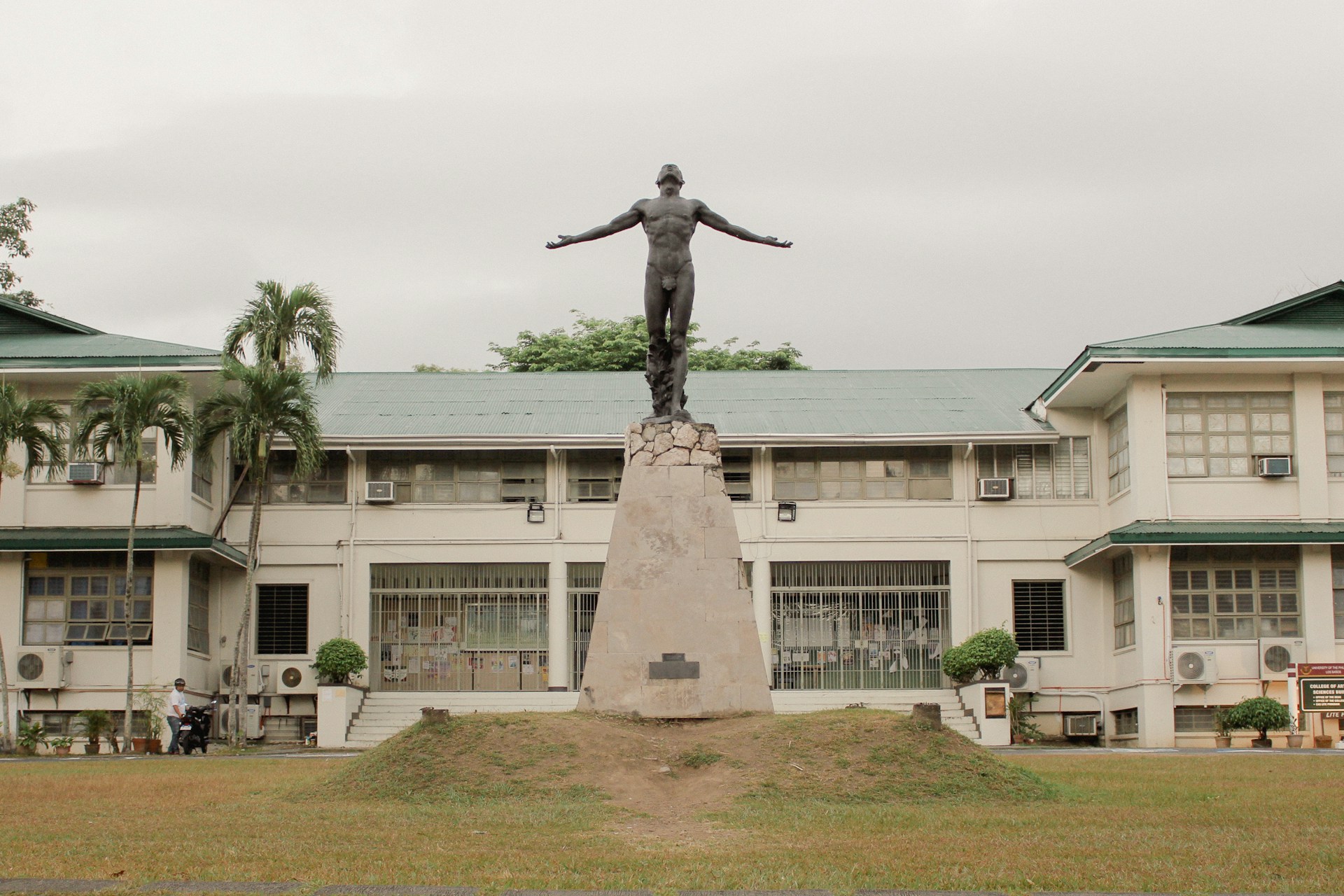
The Philippines, by contrast, languishes with a mere six ranked universities. Ateneo de Manila University remains the local frontrunner, but it resides in the 501–600 bracket—a distance from the elite that suggests a widening gap rather than a closing one. Aside from the University of the Philippines (UP) and the state-run Mindanao State University-IIT, the list is dominated by the private sector: De La Salle, UST and Mapua.
Curse of the Echo Chamber
The primary culprit for this lagging performance is a phenomenon academics call “academic inbreeding.” In the Philippines, the ivory tower is often a closed loop. It is common practice for a university to hire its own graduates as faculty, promoting them through the ranks based on years of service rather than the impact of their research. This creates an intellectual echo chamber where fresh, disruptive ideas are often viewed as threats rather than progress.
This closed system is reinforced by a social architecture unique to the archipelago. In Manila’s top corridors, success is often dictated by membership in powerful fraternities, sororities and course-specific societies. While these networks provide a crucial safety net for graduates entering a volatile labor market, they also stifle meritocracy.
When the “who you know” factor outweighs the “what you know,” the incentive for faculty to innovate or publish in high-impact international journals evaporates. Why struggle for a peer-reviewed breakthrough when local tenure is secured through affiliation?
Research as a Missing Metric
The THE rankings are weighted heavily toward research citations—a metric that measures how often a university’s work is referenced by the global scientific community. This is where the Philippine “labor export” mindset proves to be a liability. For decades, the Philippine education system has been optimized to produce workers: nurses for London, maritime officers for Greek tankers, and accountants for the Middle East.
While this has been a boon for remittances, it essentially traded the long-term intellectual gain of people staying in. Because the trained human resource are focused on leaving, the local intellectual infrastructure never builds up.
Malaysia’s Universiti Teknologi Petronas (UTP) has broken into the Asian top 40 precisely because it abandoned the generalist approach in favor of specialized, industry-backed research in energy and technology. In Vietnam, a surge of 11 ranked universities is the result of aggressive state funding and a mandate for international collaboration.
In the Philippines, the majority of faculty are buried under teaching loads of 18 to 24 units a week, leaving them with neither the time nor the funding to pursue meaningful inquiry.
Path forward?
The Philippines faces a strategic fork in the road. It could attempt the “Singapore model,” po uring the lion’s share of national resources into UP to create a singular, world-class champion. However, given the archipelago’s geography and the uneven quality of primary education, an “India-style” expansion appears more doable.
By professionalizing the country’s 100-plus State Universities and Colleges (SUCs), the government could theoretically create a broad base of research-capable institutions. But this would require a painful dismantling of the current “closed system.” It would mean hiring outsiders over alumni, prioritizing PhD holders over political appointees, and shifting the focus from producing “employable” workers to “innovative” thinkers.
Until the Philippines treats its universities as engines of discovery rather than just social finishing schools, it will continue to watch from the sidelines as its ASEAN neighbors climb the ladder with the view of the rest of Asia becoming increasingly distant.
By: Joel Adriano