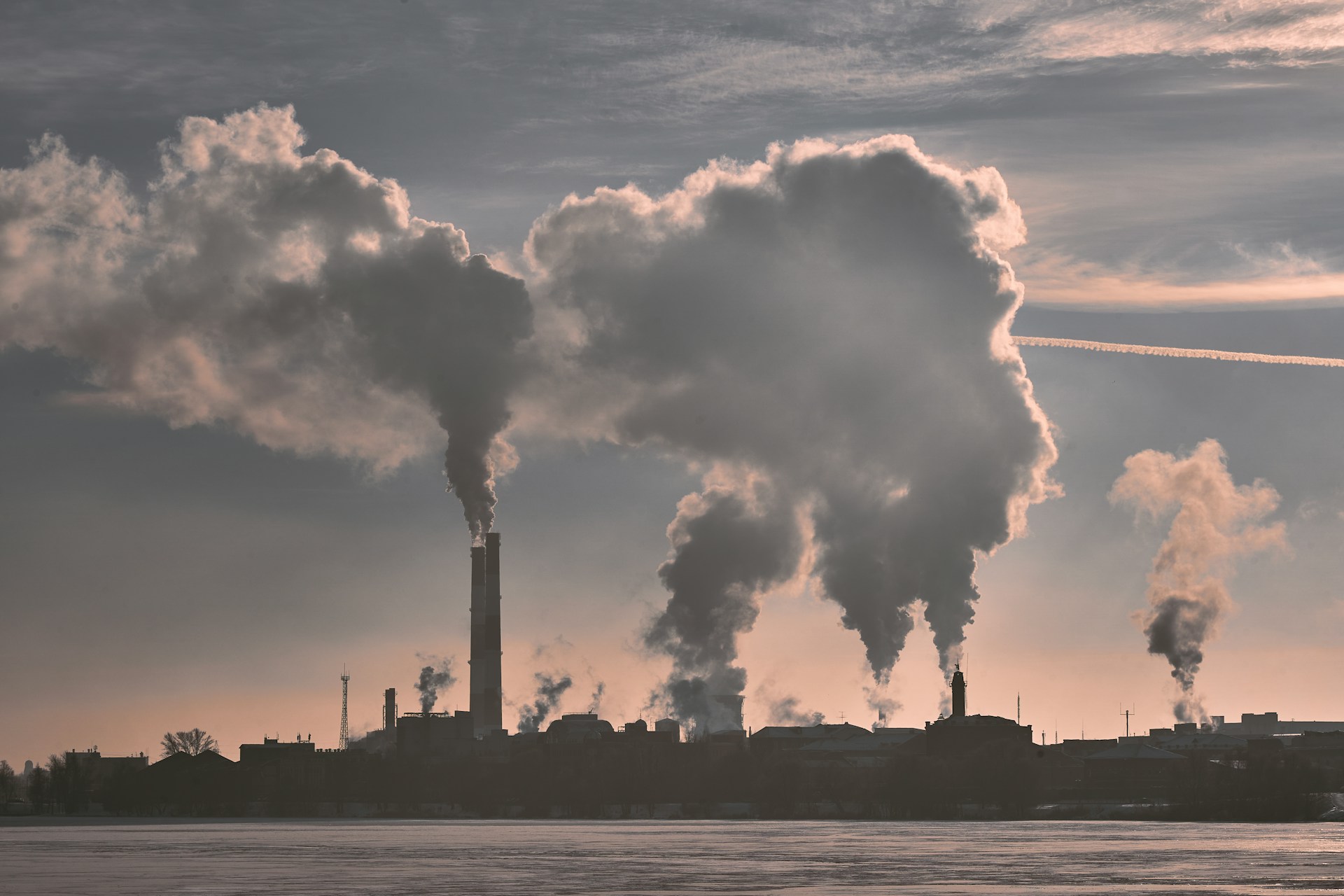
Photo by Maxim Tolchinskiy on Unsplash
MANILA, PHILIPPINES [TAC] – Filipinos are currently breathing air that exceeds World Health Organization (WHO) safety limits, leading to nearly 87,000 annual deaths and a P1.4 trillion (US$25 billion) economic burden, according to a new policy report released by Liveable Cities Philippines.
The paper, titled “Let’s Clear the Air,” warns that while Metro Manila’s air quality improved by 20% between 2016 and 2024, the nation remains “data blind” in most corridors, hampered by a lack of monitoring infrastructure.
The policy paper also points out that the Philippine Clean Air Act, now 27 years old, is woefully out of date. Its national standard for PM2.5 is five times more permissive than the WHO’s current guidelines. Aligning these standards with international benchmarks is a necessary first step.
Deadly toll of traffic
“Poor air quality is a major contributor to mortality in the Philippines,” the report states, noting vehicle emissions as the primary culprit, accounting for 57% of PM2.5 pollution in Metro Manila.
The city’s iconic jeepneys, though culturally beloved, are mobile environmental disasters. Their drivers breathe in 36.4 μg/m³ daily levels of PM2.5, more than seven times higher than what the WHO deems safe.
Health experts involved in the study noted that these fine particles pass through the lungs directly into the bloodstream, triggering chronic conditions such as heart disease, stroke, and lung cancer. These preventable illnesses now represent the leading environmental cause of premature death globally.
Fighting ‘Data Blind Spot’
A central challenge for local officials is the lack of “hyperlocal” information. Currently, only seven of the 17 local government units in the National Capital Region operate functional air quality sensor networks.
To address this, a consortium known as “Breathe Metro Manila”—including the Manila Observatory and Ateneo de Manila University—is deploying low-cost, lightweight sensors to provide real-time data to the public.
“When citizens can see what is in the air they breathe and act on it, monitoring becomes more than a technical exercise,” the report says. “It becomes a tool for civic accountability”.
The report highlights Quezon City and Mandaluyong as models for success. Quezon City has scaled its network to 60 sensors and trained 500 “Clean Air Advocates” to report violations, while Mandaluyong uses an AI-enabled system to enforce anti-smoke-belching ordinances.
Call for ‘Data Sovereignty’
The urgency for local action has increased following the March 2025 termination of the US State Department’s global embassy air quality monitoring program. Advocates argue the Philippines must achieve “data sovereignty” by building its own infrastructure rather than relying on external sources. The paper concludes with three primary recommendations:
- Expand monitoring: Jointly fund hyperlocal sensor networks in all cities, prioritizing high-traffic and industrial zones.
- Attack the source: Transition public utility vehicles to Euro 4 fuel standards or better and accelerate the move to electric and active mobility.
- Legislative reform: Amend the 1999 Clean Air Act to align national standards with the stricter WHO guideline of 5 μg/m³.
“The problem is urgent, the solutions are available,” the report says. “What’s missing is scale, coordination, and political will”.