Photo by Kristin Hoel on Unsplash
Dr. Jerome L. Montemayor
Executive Director, ASEAN Centre for Biodiversity
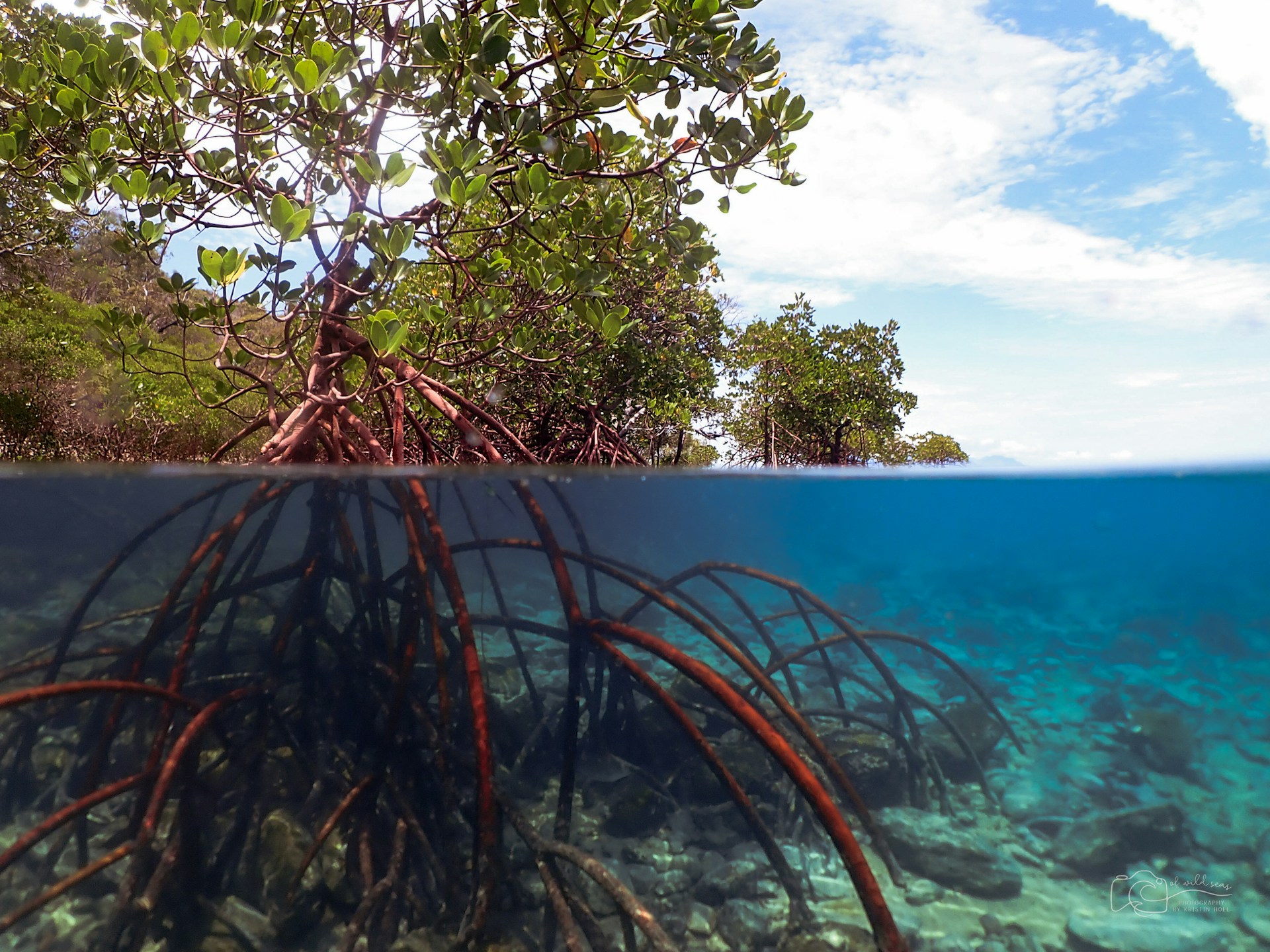
Our efforts are working! From being widely considered as one of the most threatened ecosystems due to rapid deforestation, a study released last month reported that mangrove forest cover has steadily increased through natural regeneration and restoration initiatives since 2010.
On this year’s International Day for the Conservation of the Mangrove Ecosystem, the ASEAN Centre for Biodiversity (ACB) celebrates this global achievement while urging governments, Indigenous Peoples, local communities, youth, women’s groups, civil society, and the private sector to sustain momentum through ongoing ecosystem conservation and restoration initiatives.
In addition to being home to a diverse range of wildlife species, mangroves provide food and other raw materials, sustain livelihoods, and have protected shorelines and those who live in coastal areas from large waves, storms and tsunamis. With around 40 percent, the largest concentration of mangroves in the world, the ASEAN region is also home to the largest blue carbon ecosystems.
Blue carbon ecosystems, such as mangroves, seagrasses, and peatlands, play an important role in climate mitigation. These are actual nature-based solutions that store carbon to remove excess carbon dioxide in the atmosphere to mitigate global warming. It is estimated that these ecosystems capture 55 per cent of the world’s carbon, more efficiently than terrestrial forests.
Another study published last month estimates that mangrove and seagrass ecosystems in the ASEAN region cover more than seven million hectares. This substantial carbon reservoir can store more than 850 megatons of carbon in coastal soils, which then translates to a net climate benefit of 44.6 million metric tons of carbon dioxide equivalent per year.
Regional frameworks
Cognizant of the importance of mangroves as part of blue carbon ecosystems, the ASEAN Member States developed the ASEAN Strategy on Sustainable Mangrove Ecosystem Management. This document offers a strategic framework that guides actions and integrates science, policy, community engagement, and international cooperation to promote the resilience and vitality of the region’s mangrove ecosystems, mitigate the impacts of climate change, and continue to contribute to the well-being of coastal communities and those who depend on these resources.
Blue carbon is also part of the ASEAN Blue Economy Implementation Plan for Sustainability and Prosperity, which was released in December 2025 to operationalize the ASEAN Blue Economy Framework. This plan recognizes how healthy blue carbon ecosystems are valuable natural resources that need to be secured to achieve long-term economic growth for the region. One of its expected outcomes is the strengthening and standardizing of approaches to blue carbon and biodiversity markets to ensure that carbon and biodiversity credits are credible, traceable, and compatible with international markets.
Blue carbon ecosystems directly support the realization of the ASEAN Community Vision 2045 by serving as natural solutions to the climate crisis. This regional roadmap aims to enhance climate change mitigation and adaptation—reducing vulnerability, and promoting a resilient and sustainable ASEAN community.
Furthermore, these initiatives contribute to Sustainable Development Goals 11, 13, and 14, and are likewise aligned with the ASEAN Biodiversity Plan and the Kunming-Montreal Global Biodiversity Framework. Target 2 of these frameworks aims to restore 30 per cent of all degraded ecosystems by promoting science- and knowledge-based terrestrial, inland water, and coastal and marine restoration.
ASEAN efforts
The ACB, in partnership with the Global Environment Centre, is implementing the Enhancing Conservation and Restoration of Wetlands and Peatlands in ASEAN as Effective Sinks and Reservoirs of Greenhouse Gases project, an initiative funded by the UK Mission through the ASEAN-UK Green Transition Fund. In the project pilot sites, the Maludam National Park in Sarawak, Malaysia, and the Agusan Marsh Wildlife Sanctuary in Agusan del Sur, Philippines, interventions in the form of micro-grants are being proposed to restore wetlands and peatlands while providing livelihood support to the community. Nursery establishment for native species and other nature-based solutions, including practical intervention to strengthen fire prevention, were also proposed.
The ACB likewise promotes data sharing and knowledge management on mangroves to the general public through the ASEAN Biodiversity Dashboard, an online interactive platform for visualizing trends and geographic variation in biodiversity indicators.
In addition, the ACB is also engaged in various communication, education, and public awareness activities. Earlier this year, Mangrove Matters PH, supported by the ACB, published Mangroves for YOUth, a workbook that aims to help primary school students understand the importance of mangroves, their unique features, and their vital role in protecting coastal communities and supporting biodiversity.
Just ahead of International Mangrove Day, the ACB co-organized a webinar featuring a panel of ASEAN Flyway Network experts showcasing integrated management practices protecting mangroves and coastal ecosystems, which are vital habitats of migratory waterbirds in the flyway and as nature-based solutions to climate resilience. Some of the sites cited for their notable mangrove rehabilitation practices and bird conservation were Bang Pu Nature Education Center – an ASEAN Heritage Park, Ban Pak Thale in Thailand, and Pulau Rambut Wildlife Sanctuary in Indonesia.
Although progress has been made globally, these valuable natural resources continue to face threats, and significant losses are still reported in different parts of the globe. International Mangrove Day challenges all of us to become active stewards of our blue carbon ecosystems – mangroves, seagrasses, and peatlands. There are many ways in which we can take part in this shared responsibility. One can participate in mangrove planting and growing activities, ensuring that the right species are used in the appropriate areas. We can likewise promote and patronize sustainable businesses, reduce plastic pollution, actively take part in advocacy activities, and generously support the youth engaged in biodiversity conservation, climate action, and blue economy solutions.
All hope is not lost at all. Let us continue and further accelerate the momentum we have gained these past years. May the recovery of mangrove ecosystems inspire us to do more and reach out to more people to become champions of ASEAN biodiversity!