
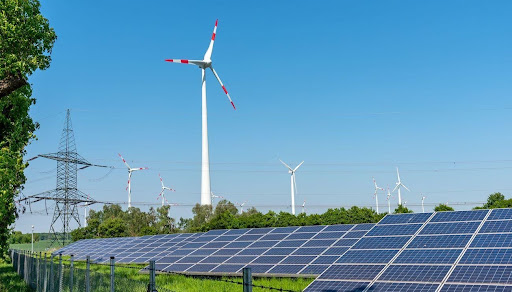
NEW YORK, US [TAC] – Countries must build more renewable power capacity in the next five years than in all previous history combined to hit global climate targets, despite adding a record amount of clean energy in 2025, according to an international tracking report released on Thursday.
The report, published during Climate Week NYC by the International Renewable Energy Agency (IRENA), the COP31 Presidency of Türkiye, and the Global Renewables Alliance, warns that current installation rates remain insufficient to meet commitments established at the COP28 summit in Dubai.
Global installed renewable capacity reached 5.15 terawatts (TW) at the end of 2025, buoyed by a record 693 gigawatts (GW) of additions during the year. However, meeting the target of tripling total capacity to 11.2 TW by 2030 will require annual additions to nearly double to an average of 1,200 GW per year between 2026 and 2030.
“Renewables can still close the gap towards 2030, but energy efficiency is falling behind, electricity demand is rising faster than expected, and the grid infrastructure has failed to keep pace,” said IRENA Director-General Francesco La Camera.
The assessment also found that global energy intensity improved by roughly 2% in 2025, far short of the 4% annual efficiency gain required under the COP28 agreement.
Grid investments, financing gaps
To maintain the path toward limiting global warming to 1.5 degrees Celsius, the report calls for global grid investments to reach nearly $1 trillion annually through 2030—more than double 2025 investment levels.
Persistent bottlenecks in grid connections, flexible energy storage deployment, and slow regulatory approvals threaten to derail execution, particularly in developing economies struggling to secure low-cost transition capital.
UN Secretary-General António Guterres urged policymakers to act aggressively to clear operational barriers. “We must go further and faster to clear the bottlenecks that delay the transition, drive investment to developing countries, and break our addiction to volatile fossil fuels,” Guterres said.
The findings highlight growing momentum in solar technology and battery systems. Costs for battery storage fell by 30% between 2024 and 2025, making 24/7 solar-plus-storage projects increasingly cost-competitive. Hybrid projects accounted for approximately one-quarter of utility-scale solar commissioned globally in 2025.
Under IRENA’s baseline roadmap, variable renewables like solar and wind are projected to comprise 62% of total installed global power capacity by 2030, up from 35% in 2025.
Electrification push ahead of COP31
As governments prepare for the COP31 UN Climate Conference in Antalya, Türkiye, host officials are shifting political focus toward rapid electrification of transport, heating and industrial manufacturing.
Türkiye’s COP31 President-Designate Murat Kurum announced a target to source 35% of global final energy consumption from electricity by 2035, urging international alignment behind the science-based benchmark. Australia, serving as President of Negotiations for COP31 alongside Türkiye, emphasized that building modern transmission lines and storage networks must anchor incoming negotiations.
Industry representatives urged governments to treat power infrastructure as a priority for economic security rather than solely an environmental mandate.
“Renewables offer us a path to safety, reducing dependence on imported fuels, creating skilled jobs and stimulating growth,” said Ben Backwell, chair of the Global Renewables Alliance. “Governments must change gear and make renewables a national economic priority today.”